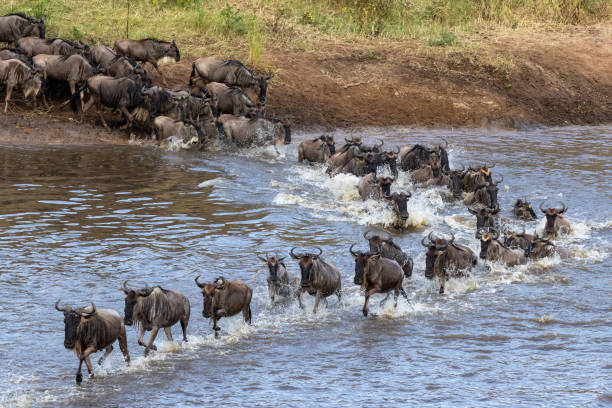
The Ultimate Guide to the Serengeti River Crossing: There are few events in the natural world that can rival the raw, visceral intensity of the Great Migration’s river crossings. While the migration is a year-round cycle of movement across Tanzania’s vast savannahs, the river crossings represent its dramatic climax. It is the moment the ecosystem narrows into a bottleneck of life and death, where the thunderous energy of two million hooves collides with the deceptive, murky waters of the Mara River.
To witness a Serengeti river crossing is to witness nature at its most violent, most chaotic, and most magnificent. It is a story of desperate hunger, primal fear, and the relentless drive for survival. For safari enthusiasts and photographers, it is the holy grail, the moment that defines a journey to East Africa. This guide explores the dynamics of this extraordinary phenomenon, from where and when to go, to the brutal reality of what unfolds on the riverbanks.
The Northern Serengeti and Kogatende
While the migration moves through the Western Corridor (Grumeti River) earlier in the year, the event that captures the world’s imagination takes place in the Northern Serengeti, along the banks of the Mara River. This remote region, often accessed via the Kogatende airstrip, borders Kenya’s Maasai Mara.
The landscape here is different from the endless short-grass plains of the south. It is a rugged, hilly terrain of acacia woodlands and wide valleys. The Mara River winds through this landscape like a dark, lazy snake, deceptively calm on the surface but treacherous underneath. The riverbanks are often steep and muddy, creating formidable obstacles for the herds.
The “crossing season” traditionally spans from July to October, though precise timing depends entirely on the rainfall patterns of that year. The herds gather in massive numbers on the southern bank, grazing, resting, and building up the courage to leap into the unknown. It is a psychological standoff that can last for hours or even days.
The Psychology of the Herd
For the uninitiated, the river crossing can seem like a moment of mass hysteria. However, it is a complex behavioral event driven by a desperate need for food. The herds are following the rains northward; the lush grass on the other side of the river calls to them. Yet, their instinct warns them of the danger lurking in the water.
Wildebeest (and the accompanying zebras) are skittish animals. They possess a strong herd mentality, which is a defense mechanism against predators. When one moves, they all want to move. But when one stops, they all stop. On the riverbank, this creates a tense buildup. Thousands of animals will mill at the water’s edge, sniffing the air, nudging one another, and retreating in panic if a stone falls into the water.
Usually, the crossing begins with a “scout.” A single animal might slide down the embankment to drink. If nothing happens, others may follow. But often, it takes a catalyst—a surge of animals from the back pushing the front line, or a moment of collective bravery. Once the first few jump, the dam breaks. The psychological pressure to stay with the herd overcomes the fear of the river, and the herd surges forward in a chaotic stampede.
The danger of the Mara River is multi-faceted.
The Nile Crocodiles: These ancient reptiles are the most famous antagonists in this drama. Many of them are massive, some exceeding five meters in length and weighing over 500 kilograms. Having fasted for months or even a year, they await the migration with a patience that is terrifying. They congregate in the shallows, bobbing like logs, invisible to the approaching herds until it is too late. When the crossing begins, they snap into action with explosive speed. A crocodile does not kill instantly; it clamps its jaws onto a wildebeest or zebra, dragging it into the deep to drown. It is a gruesome spectacle, but one that is essential for the survival of these prehistoric reptiles.
The Current and Muddy Banks: Surprisingly, more animals die from drowning and exhaustion than from crocodile attacks. The wildebeest are strong runners but poor swimmers. The Mara River’s current can be swift, and the steep, muddy banks on either side act like a slide with no traction. As thousands of animals try to scramble up the opposite bank, the ground becomes churned into a slick chute. Those behind cannot stop; they pile on top of those in front, creating a tragic, crushing wall of bodies. Many drown in the tangle of hooves simply because they cannot stand up or breathe.
The Panic: The crossing is a deafening cacophony of grunts, splashes, and the roar of the water. The dust kicked up by thousands of hooves can choke the air. In this blind panic, mothers lose calves, and calves drown within meters of their parents. It is a heartbreaking scene, but it underscores the relentless mathematics of nature. For every life lost, dozens make it to the other side.
The Role of the Zebra
While the wildebeest are the stars of the show, the zebras play a crucial tactical role. Zebras have different instincts and physical attributes than wildebeest. They have excellent eyesight and better hearing, and they often act as the sentinels. During a crossing, you will often see zebras leading the way or mixed in with the wildebeest.
Furthermore, zebras are more aggressive. If attacked by a crocodile, a herd of zebras will sometimes form a circle, kicking and biting to defend their own. They also navigate the current differently. Where a wildebeest might panic and drown, a zebra’s strong legs often allow it to break the current and reach safety. The dynamic between the two species—the striped sentinels and the chaotic grazers—adds a layer of complexity to the event.
Kogatende vs. The Lamai Wedge
The river crossings occur along a stretch of the Mara River that flows through both Tanzania and Kenya. Historically, the Kenyan side (the Maasai Mara) was marketed heavily for the crossings. However, the northern Serengeti (Kogatende) in Tanzania offers distinct and often superior advantages.
The herds move up the Kogatende side of the river first. The terrain in Tanzania is wilder and less populated than the Kenyan parks. Because the migration follows the rain, you don’t necessarily have to cross the border into Kenya to see the crossings; the herds crisscross the river back and forth for weeks between Tanzania and Kenya, often spending more time on the Tanzanian side where the grazing is extensive.
Staying in the Northern Serengeti luxury mobile camps (which move with the herds) provides the best access. You can drive to the river at dawn, claiming the best spots before the day heats up and before other vehicles arrive from further afield.
The Aftermath
Once the herds have crossed, the scene is one of eerie calm. The water is brown and churned, dotted with debris. The grass on the far bank has been cropped to the ground. Occasionally, the bodies of the unlucky float downstream, providing a feast for vultures and marabou storks perched in the trees.
The herds continue their journey, spreading out into the plains of the Maasai Mara or the northern Serengeti hills. The crocodiles retreat back to the depths, digesting their meals and waiting for the next wave.
For those who witness it, the Serengeti River Crossing is a profound reminder of the raw power of nature. It is not for the faint of heart; it is bloody and brutal. Yet, it is also a testament to the resilience of the animal kingdom. The sheer determination of the wildebeest to survive, despite the odds, against the currents, and against the jaws of giants, is one of the most inspiring sights on Earth.
Tips for the Traveler
Book Early: This is the peak season. Access to the Kogatende area is limited, and the best lodges and camps are booked a year in advance.
Plan for Multiple Days: Do not allocate just one day for the river. Give yourself at least three nights in the Northern Serengeti to account for the unpredictability of the herds.
Bring the Right Gear: The dust is immense. Bring waterproof covers for your camera bags and dust-proof clothing. A telephoto lens (200mm-400mm or more) is essential, but a wide-angle lens is great for capturing the scale of the herds on the plains.
Respect the Wildlife: Guides must adhere to strict rules. Do not pressure your guide to drive too close to the bank or to block the animals’ path. We are observers in their home.
In conclusion, the Serengeti River Crossing is more than just a tourist attraction; it is one of the last great spectacles of the natural world. It is a battle between predator and prey, river and land, fear and survival. To stand on the banks of the Mara River and watch the herds leap is to witness a scene that has played out for millennia, a timeless dance of life that is etched into the soul of Africa.