Neumann’s Warbler: Habitat, Identification, Distribution and Where to See It
Introduction to Neumann’s Warbler
Neumann’s Warbler (Hemitesia neumanni), also known as Neumann’s Short-tailed Warbler, is a fascinating and relatively elusive forest bird native to the Albertine Rift region of Central Africa. It is among the specialised forest species that make the montane rainforests of this region important destinations for birdwatchers and ornithologists.
This small passerine belongs to the family Cettiidae and is particularly associated with dense vegetation in tropical montane forests. Unlike many colourful birds that can easily be spotted in forest canopies, Neumann’s Warbler spends much of its time moving quietly through thick undergrowth. Its secretive behaviour makes finding it an exciting experience for patient birdwatchers.
The species is recognised as an Albertine Rift endemic, meaning its natural distribution is restricted to this biologically important region. It is associated with forest habitats in eastern Democratic Republic of Congo, southwestern Uganda and Rwanda, with some distribution references also including Burundi.
For visitors interested in specialist birdwatching, Neumann’s Warbler is an interesting species to look for when exploring the montane forests of Bwindi Impenetrable National Park and Nyungwe Forest National Park.
Physical Characteristics and Identification of Neumann’s Warbler
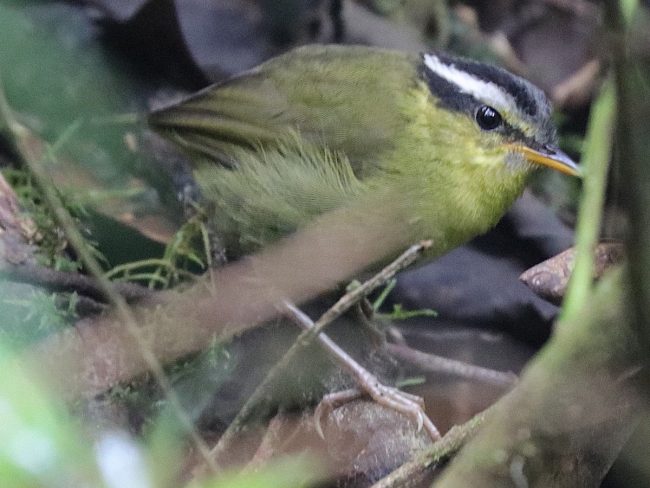
Neumann’s Warbler is a small, inconspicuous forest bird with a compact body and characteristically short tail. Its subtle plumage provides effective camouflage in the shaded environments where it spends much of its time.
Important identification characteristics include:
-
Size: A small-bodied forest passerine.
-
Tail: A notably short tail, which gives the bird its alternative name, Neumann’s Short-tailed Warbler.
-
Colouration: Relatively subdued brownish and olive-toned plumage.
-
Body shape: Compact, with a rounded appearance.
-
Behaviour: Secretive and frequently observed moving through dense vegetation.
-
Voice: Its vocalisations are useful for identifying its presence when visual sightings are difficult.
Because of its preference for thick undergrowth, birdwatchers should pay attention to movement and calls rather than expecting to see it sitting in exposed branches.
Natural Habitat of Neumann’s Warbler
Neumann’s Warbler is primarily associated with moist montane forests, particularly areas with dense undergrowth and abundant vegetation. These environments provide suitable shelter, feeding opportunities and breeding habitat.
The species favours forest interiors where moisture levels remain relatively high and vegetation provides sufficient cover.
Its preferred habitats include:
-
Tropical montane rainforests.
-
Dense forest undergrowth.
-
Moist woodland habitats.
-
Shaded forest sections.
-
Areas with thick shrubs and tangled vegetation.
-
Forest environments with suitable insect populations.
Neumann’s Warbler is a resident forest species rather than a long-distance migrant. Its survival is closely connected to the continued availability of suitable montane forest habitats.
Geographical Distribution: Where Is Neumann’s Warbler Found?
Neumann’s Warbler has a relatively restricted geographical distribution within the Albertine Rift, an area internationally recognised for its exceptional biodiversity and high concentration of endemic species.
Its geographical range includes parts of the following countries.
1. Uganda
Southwestern Uganda is an important destination for birdwatchers searching for Neumann’s Warbler. The region contains extensive montane rainforest habitats that support numerous Albertine Rift endemic birds.
Bwindi Impenetrable National Park is particularly important because of its rich forest birdlife and diversity of specialised montane species.
2. Rwanda
Rwanda is another important country for Neumann’s Warbler. Its montane rainforest habitats provide suitable environments for several Albertine Rift endemics.
Nyungwe Forest National Park is one of the country’s leading birdwatching destinations and an important location for exploring the region’s unique forest bird communities.
3. Democratic Republic of Congo
Eastern Democratic Republic of Congo contains extensive montane forest habitats within the Albertine Rift. These forests support a remarkable diversity of restricted-range birds, including Neumann’s Warbler.
4. Burundi
Some bird distribution references include western Burundi within the species’ broader geographical range. Its occurrence and local distribution should be confirmed using current regional bird records when planning specialist birding excursions.
Best Places to See Neumann’s Warbler
The Albertine Rift contains several important birdwatching destinations where visitors can explore suitable habitats for Neumann’s Warbler. The montane rainforests of southwestern Uganda and Rwanda are particularly interesting for birding enthusiasts.
1. Bwindi Impenetrable National Park, Uganda
Bwindi Impenetrable National Park is one of East Africa’s most important birdwatching destinations. Located in southwestern Uganda, this ancient rainforest supports an exceptional variety of forest birds, including several Albertine Rift endemics.
The park is an important location for birdwatchers interested in Neumann’s Warbler and other specialised forest species.
Birdwatching opportunities are available in different sections of Bwindi, including Buhoma, Ruhija, Rushaga and Nkuringo. Experienced birding guides can help visitors identify suitable habitats and recognise the calls of difficult-to-find species.
In addition to birdwatching, visitors can enjoy mountain gorilla trekking, guided forest walks and cultural experiences with surrounding communities.
2. Ruhija Sector, Bwindi
Ruhija is situated in the eastern section of Bwindi Impenetrable National Park and is particularly popular among specialist birdwatchers.
Its montane forest environment supports a variety of Albertine Rift endemic birds. The Mubwindi Swamp trail is one of the area’s well-known birdwatching routes, attracting visitors interested in searching for rare forest species.
Birdwatchers exploring Ruhija should pay attention to dense vegetation and forest undergrowth, where secretive species such as Neumann’s Warbler may be encountered.
Other birding targets in the area include:
-
African Green Broadbill.
-
Grauer’s Rush Warbler.
-
Rwenzori Turaco.
-
Regal Sunbird.
-
Archer’s Robin-Chat.
-
Handsome Francolin.
3. Buhoma Sector, Bwindi
Buhoma is located in the northern section of Bwindi Impenetrable National Park. It provides access to beautiful rainforest trails and a wide variety of forest bird habitats.
The area is suitable for visitors combining birdwatching with mountain gorilla trekking.
Guided forest walks provide opportunities to search for different bird species while learning about the ecology of Bwindi’s rainforest.
4. Nyungwe Forest National Park, Rwanda
Nyungwe Forest National Park is one of Rwanda’s most important biodiversity conservation areas. Located in southwestern Rwanda, it protects an extensive montane rainforest ecosystem.
The park is internationally recognised for its exceptional bird diversity, including numerous Albertine Rift endemic species.
Birdwatchers visiting Nyungwe can explore designated forest trails accompanied by knowledgeable local guides. These excursions offer opportunities to search for specialised forest birds, listen to different bird calls and observe the remarkable vegetation of the forest.
Neumann’s Warbler is among the species of interest to birdwatchers exploring suitable habitats in the Albertine Rift region.
Feeding Behaviour and Diet
Neumann’s Warbler is an insectivorous bird that feeds mainly on small invertebrates found within forest vegetation.
It searches for food among leaves, shrubs, branches and other dense vegetation, where small insects and spiders are commonly found.
Its diet includes:
-
Small insects.
-
Spiders.
-
Other tiny arthropods.
-
Small forest-dwelling invertebrates.
Its feeding behaviour is adapted to life in thick forest undergrowth, where it can search for food while remaining relatively concealed.
By feeding on insects and other invertebrates, Neumann’s Warbler contributes to the ecological functioning of its forest habitat.
Behaviour and Lifestyle
Neumann’s Warbler is a secretive forest bird that spends much of its time moving through dense vegetation. Unlike species that frequently perch in exposed branches, it is more likely to be encountered within the lower layers of the forest.
Its behaviour makes it an interesting target for experienced birdwatchers who enjoy searching for elusive species.
Some notable behavioural characteristics include:
-
Preferring dense vegetation and forest cover.
-
Moving quietly through undergrowth.
-
Feeding on small invertebrates.
-
Using vocalisations for communication.
-
Remaining difficult to observe during ordinary forest walks.
Birdwatchers familiar with its calls have a better chance of detecting its presence, even when the bird remains hidden.
Breeding and Reproduction
Neumann’s Warbler reproduces within its natural forest environment. However, detailed information about its nesting behaviour, clutch size, incubation period and breeding biology remains relatively limited in widely available species accounts.
Like other small forest passerines, its reproductive success depends on suitable habitat, food availability and protection from environmental disturbances.
Further ornithological research would help improve understanding of its breeding ecology and population dynamics.
Conservation Status and Threats
Neumann’s Warbler is an important component of the Albertine Rift’s unique biodiversity. Its restricted geographical distribution makes the conservation of suitable montane forest habitats particularly important.
The species is classified as Least Concern on the IUCN Red List, although this classification does not mean that its habitat is free from environmental pressures.
Potential threats to its forest environment include:
1. Deforestation: Clearing natural forests for agriculture, settlements and other land uses can reduce available habitat.
2. Forest fragmentation: Dividing continuous forest ecosystems into smaller isolated sections can affect the movement and survival of forest-dependent species.
3. Agricultural expansion: Increasing agricultural activities around forest boundaries can place additional pressure on natural vegetation.
4. Human encroachment: Unsustainable resource extraction and other human activities may contribute to forest degradation.
5. Climate change: Changes in temperature and rainfall patterns may affect montane forest ecosystems and the species that depend on them.
Protecting important conservation areas such as Bwindi Impenetrable National Park and Nyungwe Forest National Park is essential for maintaining the habitats of Albertine Rift endemic birds.
Birdwatching Tips: How to Find Neumann’s Warbler
Finding Neumann’s Warbler requires patience, concentration and an understanding of its preferred forest habitat. Its secretive nature means that visitors may hear it before getting a clear view.
Consider the following birdwatching tips:
-
Hire an experienced birding guide: Local specialists understand forest bird behaviour and can help identify suitable locations.
-
Listen carefully: Pay attention to bird calls and sounds coming from dense vegetation.
-
Explore forest undergrowth: Search shaded areas, shrubs and thick vegetation rather than concentrating only on the forest canopy.
-
Move slowly: Avoid unnecessary noise and sudden movements that may disturb forest birds.
-
Carry quality binoculars: Good binoculars are useful for observing birds through gaps in dense vegetation.
-
Start early: Early morning is generally a productive period for forest birdwatching.
-
Be patient: Some forest species require considerable time and repeated visits before they can be observed.
A specialist birdwatching excursion with an experienced guide can significantly improve the chances of finding difficult-to-see species.
Other Albertine Rift Endemic Birds to Look For
A birdwatching trip in Bwindi or Nyungwe offers opportunities to search for several other fascinating birds restricted to the Albertine Rift region.
Some notable species include:
-
African Green Broadbill: A striking forest bird associated with montane rainforest habitats.
-
Grauer’s Rush Warbler: A specialised Albertine Rift endemic associated with montane swamps and dense vegetation.
-
Rwenzori Turaco: A colourful forest bird with distinctive plumage.
-
Handsome Francolin: A forest-dwelling gamebird found in the Albertine Rift.
-
Regal Sunbird: A beautiful sunbird associated with montane forests.
-
Grauer’s Warbler: Another interesting forest species for specialist birdwatchers.
-
Archer’s Robin-Chat: A restricted-range forest bird of the region.
These species make the Albertine Rift one of Africa’s most rewarding regions for specialist birdwatching.
Combine Neumann’s Warbler Birdwatching with Other Safari Activities
A birdwatching excursion in southwestern Uganda can be combined with several wildlife and cultural experiences.
Mountain Gorilla Trekking in Bwindi
Bwindi is internationally famous for its endangered mountain gorillas. Visitors can participate in guided gorilla trekking experiences, entering the forest in search of habituated gorilla families.
Combining birdwatching with gorilla trekking offers an opportunity to appreciate two important aspects of Bwindi’s biodiversity.
Golden Monkey Tracking in Mgahinga
Mgahinga Gorilla National Park is another excellent destination for nature enthusiasts. Its bamboo forests and montane vegetation provide habitat for golden monkeys and several forest bird species.
Lake Bunyonyi Excursions
Lake Bunyonyi is a beautiful highland lake surrounded by terraced hills and small islands. Visitors can enjoy canoeing, boat excursions, community walks and birdwatching around the lake.
Batwa Cultural Experiences
Visitors to Bwindi and Mgahinga can learn about the traditional forest knowledge and cultural heritage of the Batwa community through organised cultural experiences.
Chimpanzee Tracking in Kibale Forest
Kibale Forest National Park is one of Africa’s leading destinations for chimpanzee tracking. Visitors can combine primate experiences with guided forest birdwatching.
Frequently Asked Questions About Neumann’s Warbler
1. What is Neumann’s Warbler?
Neumann’s Warbler (Hemitesia neumanni) is a small, secretive forest bird belonging to the family Cettiidae. It is restricted to the Albertine Rift region of Central Africa.
2. Is Neumann’s Warbler an Albertine Rift endemic?
Yes. Neumann’s Warbler is recognised as an Albertine Rift endemic because its natural geographical distribution is restricted to this region.
3. Where is Neumann’s Warbler found?
The species occurs in parts of eastern Democratic Republic of Congo, southwestern Uganda and Rwanda. Some distribution references also include western Burundi.
4. Where can I see Neumann’s Warbler in Uganda?
Bwindi Impenetrable National Park is an important birdwatching destination for this species. Ruhija and other forest sectors provide opportunities to explore suitable montane forest habitats.
5. What habitat does Neumann’s Warbler prefer?
It is associated with moist montane forests, particularly areas with thick undergrowth and dense vegetation.
6. What does Neumann’s Warbler eat?
It feeds mainly on small insects, spiders and other invertebrates found among forest vegetation.
7. Why is Neumann’s Warbler difficult to see?
The bird is naturally secretive and spends much of its time moving through dense forest undergrowth. Its relatively subdued plumage also makes it difficult to distinguish from surrounding vegetation.
8. Is Neumann’s Warbler endangered?
It is classified as Least Concern on the IUCN Red List. Nevertheless, protecting its natural forest habitats remains important for its long-term survival.
9. Can I combine birdwatching with gorilla trekking?
Yes. Bwindi Impenetrable National Park offers opportunities to combine specialist birdwatching with mountain gorilla trekking, guided nature walks and cultural experiences.
Plan a Birdwatching Safari in the Albertine Rift
The Albertine Rift is one of Africa’s most remarkable birdwatching regions, offering opportunities to discover rare forest species, restricted-range birds and unique montane ecosystems.
Neumann’s Warbler is one of the fascinating species that make birdwatching in this region special. Although its secretive behaviour can make sightings challenging, exploring suitable habitats with an experienced birding guide provides a rewarding opportunity to discover its natural environment.
At Epic Uganda Vacation, we organise tailor-made birdwatching safaris across Uganda, including specialist excursions to Bwindi Impenetrable National Park, Mgahinga Gorilla National Park and other important birding destinations.
Whether you are interested in finding Albertine Rift endemic birds, photographing forest species or combining birdwatching with mountain gorilla trekking, we can help organise an experience suited to your interests.
Contact Epic Uganda Vacation to plan your Albertine Rift birdwatching safari.