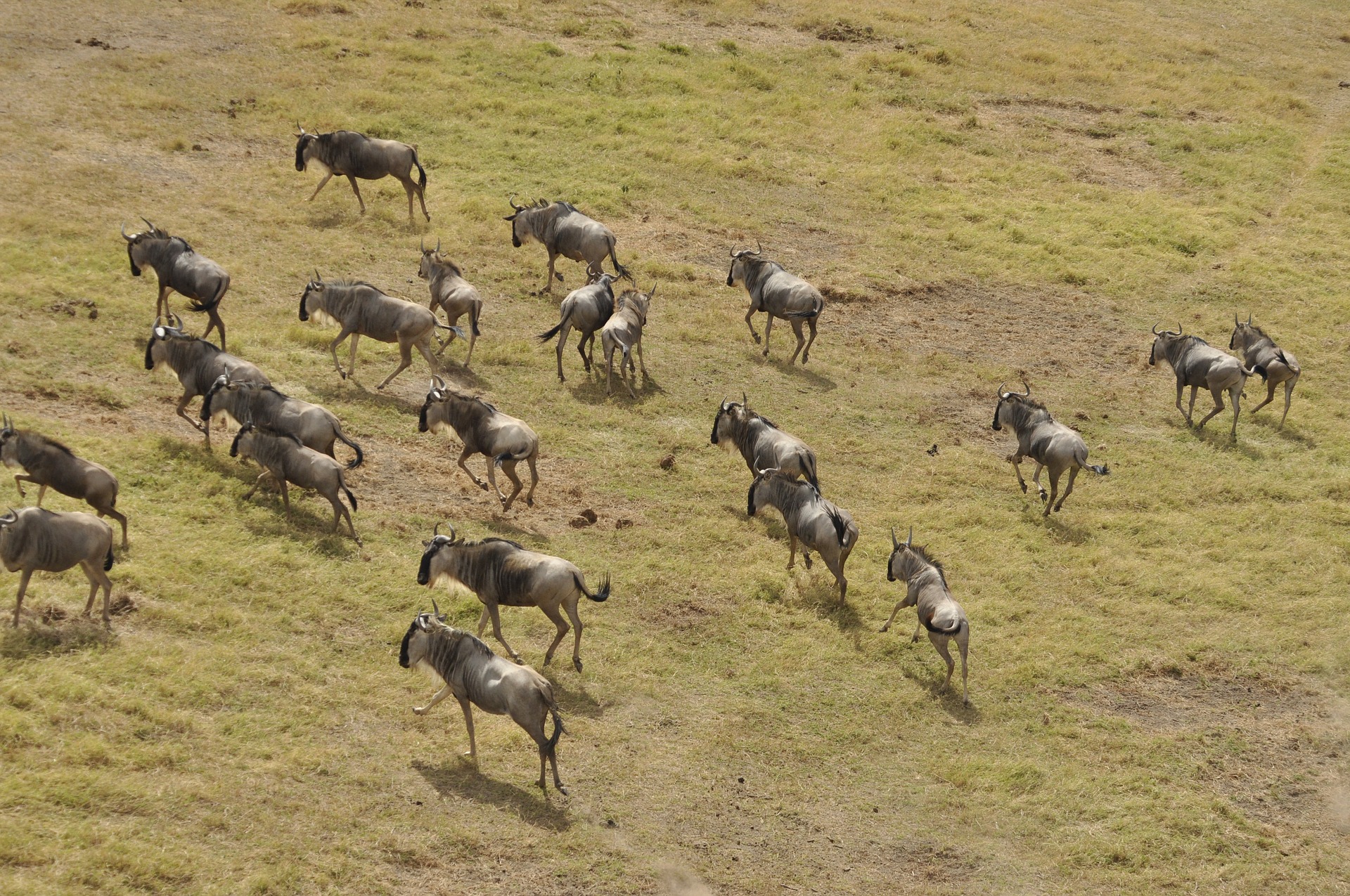
The Great Migration: A 3,000km Journey of Life and Survival
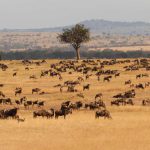
Every year, an awe-inspiring spectacle unfolds across the East African plains: nearly two million wildebeest and 20,000 plains game embark on a treacherous odyssey. This epic journey from Tanzania’s Serengeti to Kenya’s Masai Mara is a search for lush grazing grounds and life-giving water. It is a cycle dictated entirely by the seasons and the falling rain.
Spanning almost 3,000 kilometers, this is not just a trip. Instead, it is a virtually endless, clockwise movement that represents the very heartbeat of the African wild.
Tracking the Rhythm: Why Timing is Everything
The Great Migration has no true start or end point. Instead, it moves rhythmically, making the herds’ exact location unpredictable from year to year. To solve this for our travelers, we utilize the Herdtracker. This is an essential tool that allows our experts and guides on the ground to provide up-to-the-minute information on where the herds (and the predators that stalk them) are located.
Spotlight on June: The Grumeti River Transition
June is a pivotal month in the migration cycle, marking the transition from the rainy season to the dry season. The plains are a vibrant, lush green, offering a stunning backdrop for photography.
-
The Grumeti Crossing: Historically, June is when the herds reach the Grumeti River. Unlike the sheer vertical drops of the Mara River later in the year, the Grumeti crossings are often spread out. Whether you see a dramatic crossing depends entirely on the river’s water levels.
-
Expansive Herds: During this month, the wildebeest cover vast distances. Be prepared for longer, rewarding game drives—leading and trailing herds can often be separated by more than three hours of driving.
-
The Safari Experience: With the rains ending, the weather is comfortable, and the wildlife density is incredible as predators begin to congregate around the moving masses.
Plan Your Migration Safari
Whether you are an avid nature lover or a first-time traveler seeking the “safari of a lifetime,” the Great Migration offers a little more from the African experience than any other tour.
-
Tailor-Made Journeys: Choose from our curated migration safari packages or work with our experts to build a custom itinerary that fits your budget and travel dates.
-
Expert Guidance: Our affiliate camps and professional guides ensure you are always in the right place at the right time.
Expectation, Where to stay in June for great migration safari
Traditionally June is tricky because of the dispersion of the herds. You usually need time on both sides of the Nyamuma and Simiti Hills.
It’s a long way round, but this approach gives you the best of both worlds. For example, you could find yourself deep in the migration one day. Then, you might have a view of the approaching migration at the Mbalageti River the next day (we have seen some of the best migration views from the restaurant deck at Mbalageti).
That said, depending on how much rain has fallen, the back end of the migration could still be at Lake Magadi. It may also be on the southern side of the Nyamuma and Simiti Hills.
We recommend combining Makoma Hill and Mbalageti accommodation in early June and then going towards the Grumeti River in late June and early July. In addition, we suggest an even 5-night / 5-night split between the two areas for the best possible Serengeti migration safari in June.
October
October is a good time to see the wildebeest herds move back into the Serengeti. October will be milder, as the dry season approaches its climax. You might even experience early rain in the Masai Mara and the Serengeti.
The wildebeest herds are in the Masai Mara, but will start to slowly move back into the Serengeti moving through Loliondo in the east.
Expectation, Where to stay in October for migration safari
It’s best to stay in the Masai Mara to have the best opportunity to see the wildebeest herds. Nomad’s Lamai and Lemala’s Kuria Hills are good migration safari destinations.
August
August is your best month to see the dramatic Mara River crossings in the Serengeti or Masai Mara.
August is a hot and humid month as the dry season kicks into overdrive.
The wildebeest herds will continue their search for lush, greener grass. By doing so, they attempt to cross the dangerous, crocodile-infested water of the Mara River.
Expectation, Where to stay in August for great migration safari
August is the most consistent month to view river crossings. The herds will be crossing an international border between Tanzania’s Serengeti and Kenya’s Masai Mara.
Book early on both sides of the Mara River. The Olakira Camp, Sayari Mara and the Mara River mobile camps are unique migration safari accommodations.
July
July marks the start of the Mara River crossings as well as mating season in the Serengeti. July is a warm month. As the dry season approaches, the Serengeti landscape becomes more arid.
The wildebeest herds begin moving faster in search of water and greener grass, making their way across the Grumeti and Mara River. As a result, expect to see crocodile encounters.
Expectation, where to stay for a July Serengeti migration safari
The Grumeti River is where you’ll want to be during July to view early river crossings. However, due to limited accommodation, we suggest that you book early to avoid disappointment. In late July, stay closer to the Mara River for an extra river crossing experience. The Olakira Camp, Sayari Mara and Singita Explore are all great Serengeti migration safari options.