Nairobi National Park, Kenya: Wildlife, Animals, Park Fees, Facts and Best Time to Visit
Nairobi National Park is one of Africa’s most remarkable wildlife destinations. Located just a short drive from the heart of Kenya’s capital, the park offers an extraordinary opportunity to experience an authentic African safari against the backdrop of a modern city skyline.
Established in 1946, Nairobi National Park is Kenya’s first national park and one of the oldest protected wildlife areas in East Africa. It is particularly famous for its free-roaming lions, endangered black rhinos, white rhinos, giraffes, buffaloes, zebras and numerous antelope species.
Unlike most African national parks, where visitors travel several hours or even days from major cities, Nairobi National Park allows travellers to enjoy a genuine wildlife safari without leaving the capital’s immediate surroundings.
For international visitors arriving at Jomo Kenyatta International Airport, the park provides an excellent introduction to Kenya’s wildlife before continuing to destinations such as the Maasai Mara, Amboseli, Lake Nakuru, Tsavo and Samburu.
For travellers combining Uganda and Kenya safaris, Nairobi National Park can also be included in a tailor-made East African itinerary arranged by Epic Uganda Vacation.
1. Nairobi National Park: Key Facts
| Feature | Information |
|---|---|
| Country | Kenya |
| Location | Approximately 7 km south of Nairobi city centre |
| Established | 1946 |
| Size | Approximately 117 km² |
| Elevation | Approximately 1,500–1,800 metres |
| Ecosystem | Open grassland, woodland and riverine vegetation |
| Main attraction | Lions, rhinos and other savannah wildlife |
| Famous feature | Wildlife with Nairobi skyline views |
| Management | Kenya Wildlife Service (KWS) |
| Main activities | Game drives, birdwatching and nature experiences |
| Nearest airport | Jomo Kenyatta International Airport |
Why is Nairobi National Park unique?
Nairobi National Park is exceptional because it protects a substantial area of natural savannah immediately beside a major African city.
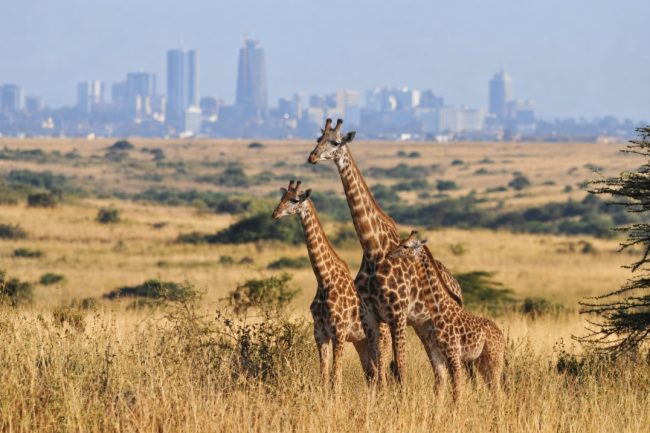
Visitors can photograph giraffes, zebras and other wild animals with Nairobi’s buildings visible in the background. This unusual combination of urban development and protected wilderness makes the park one of Kenya’s most distinctive safari destinations.
It is also an important conservation area, particularly for black rhinos, which are threatened by habitat loss and poaching across their African range.
2. Animals to See in Nairobi National Park
Nairobi National Park supports a rich variety of wildlife. Although it does not have elephants, visitors can encounter several of Africa’s most iconic mammals.
A. Rhinoceroses: Black and White Rhinos
One of Nairobi National Park’s greatest attractions is its population of endangered black and white rhinoceroses.
-
Black rhino: These are browsers that feed on shrubs and bushes. They are generally shy and prefer thicker vegetation, making sightings particularly exciting.
-
White rhino: These are grazers that feed mainly on grass and are often easier to spot in open grassland.
The park is an important stronghold for rhino conservation in Kenya. Visitors have a good opportunity to encounter these magnificent animals in their natural habitat.
B. Lions
Nairobi National Park is home to African lions, one of the most sought-after animals on a Kenyan safari.
Lions can be spotted resting under trees, walking through open grassland or hunting zebras and other grazing animals. Early morning and late afternoon game drives offer particularly good opportunities to look for them.
C. Leopards
Leopards are present in Nairobi National Park, although they are difficult to spot because of their solitary and secretive nature.
They often rest in trees, rocky areas and thick vegetation during the day before becoming more active at night. Seeing a leopard during a game drive is a special safari experience.
D. Cheetahs
Nairobi National Park is also home to cheetahs, the world’s fastest land animals. They prefer open grassland where they can use their exceptional speed to chase prey.
The park’s plains provide suitable habitat for these predators, although sightings are not guaranteed.
E. Giraffes
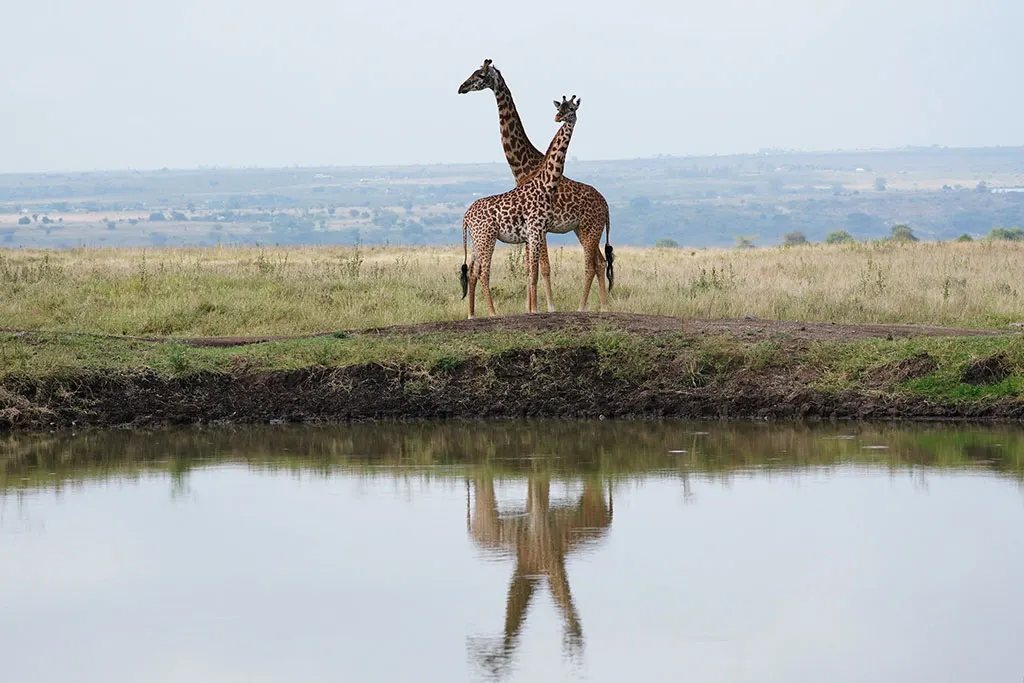
Masai giraffes are among the most photographed animals in the park. Their tall bodies and distinctive irregular patches make them easy to recognise.
Visitors can often see them feeding on acacia trees or walking across open plains. The opportunity to photograph giraffes with Nairobi’s skyline in the background is one of the park’s most memorable experiences.
F. African Buffaloes
Buffaloes are among the largest herbivores in the park. They usually move in herds and graze on grass in open areas.
They are powerful animals and should always be observed from a safe distance. Buffaloes also form an important part of the food chain, providing potential prey for lions.
G. Zebras
Plains zebras are commonly encountered in Nairobi National Park. They graze in open grassland, sometimes alongside wildebeest and different antelope species.
Their striking black-and-white stripes create beautiful photographic opportunities, particularly during the early morning when the landscape is covered in soft golden light.
H. Wildebeests
Blue wildebeests can be seen grazing in the park, sometimes moving between Nairobi National Park and the surrounding Athi-Kapiti plains.
Their seasonal movements contribute to the area’s wider wildlife ecosystem.
I. Hippos and Crocodiles
The Mbagathi River and associated water habitats provide opportunities to see hippopotamuses and Nile crocodiles.
The Hippo Pools area is a particularly interesting location for visitors interested in aquatic wildlife and riverine ecosystems.
J. Other Antelopes and Mammals
Nairobi National Park is home to several other interesting mammals, including:
-
Coke’s hartebeest.
-
Eland.
-
Common eland.
-
Thomson’s gazelle.
-
Grant’s gazelle.
-
Impala.
-
Common warthog.
-
Common waterbuck.
-
Oribi.
-
Kirk’s dik-dik.
-
Banded mongoose.
-
Vervet monkeys.
-
Olive baboons.
-
Aardvarks, although rarely seen.
Important: Nairobi National Park does not have a resident elephant population. Visitors looking for elephants should consider adding Amboseli National Park, Tsavo National Parks or other suitable Kenyan wildlife destinations to their itinerary.
3. Birds of Nairobi National Park
Nairobi National Park is an excellent destination for birdwatching, attracting both resident and migratory bird species.
Its grasslands, riverine forests, wetlands, dams and scattered acacia trees provide habitats for numerous birds.
More than 400 bird species have been recorded in the park, with some sources reporting over 500 depending on the recording period and classification.
Birds that visitors may encounter include:
-
Secretary bird.
-
Kori bustard.
-
Ostrich.
-
African crowned crane.
-
Lilac-breasted roller.
-
Martial eagle.
-
Tawny eagle.
-
African fish eagle.
-
Grey crowned crane.
-
Helmeted guineafowl.
-
Superb starling.
-
Yellow-billed stork.
-
Marabou stork.
-
Sacred ibis.
-
Hadada ibis.
-
Blacksmith lapwing.
-
Spur-winged lapwing.
-
African jacana.
-
Common ostrich.
-
Various weavers, sunbirds and other passerines.
Best time for birdwatching
Birdwatching is rewarding throughout the year. However, the wetter months, particularly November and March to May, can be particularly interesting because of migratory birds, breeding activity and the availability of food.
For bird photographers, the park’s wetlands and open grasslands provide excellent opportunities.
4. Things to Do in Nairobi National Park
There is more to Nairobi National Park than simply spotting wildlife. Visitors can enjoy several activities depending on their interests and available time.
1. Guided Game Drives
Game drives are the main activity in Nairobi National Park.
Visitors explore the park in a safari vehicle accompanied by an experienced guide who helps identify wildlife, explains animal behaviour and provides information about conservation.
Morning game drives are particularly rewarding because predators are often more active during the cooler hours.
2. Wildlife Photography
The park offers unusual photographic opportunities because of its proximity to Nairobi.
Photographers can capture:
-
Lions against open grassland.
-
Rhinos grazing in their natural habitat.
-
Giraffes with city buildings in the background.
-
Zebras and wildebeests in large herds.
-
Birds of prey hunting over the plains.
A vehicle with a pop-up roof is particularly useful for wildlife viewing and photography.
3. Birdwatching
Birdwatchers can explore different habitats in search of resident and migratory species.
A knowledgeable bird guide can help identify species by their calls, flight patterns and physical characteristics.
4. Visit the Hippo Pools
The Hippo Pools area along the Mbagathi River is a scenic section of the park. Visitors can enjoy riverine scenery and look for hippos, crocodiles and birds.
Follow the park’s safety instructions and remain within designated visitor areas.
5. Nature and Conservation Education
Visitors interested in wildlife conservation can learn about Kenya’s rhino protection initiatives, habitat conservation and the challenges of maintaining wildlife corridors around expanding urban settlements.
6. Combine the Park with Nairobi Safari Walk
The Nairobi Safari Walk is a separate wildlife education attraction managed by Kenya Wildlife Service.
It features a raised boardwalk through natural habitats where visitors can learn about Kenya’s ecosystems and wildlife conservation.
It can be combined with a Nairobi National Park visit, subject to the relevant separate entry charges.
7. Visit the Nairobi Animal Orphanage
The Nairobi Animal Orphanage is another attraction managed by Kenya Wildlife Service.
It provides care for orphaned, injured and rescued wild animals, with an educational focus on wildlife conservation.
Entry charges and opening arrangements should be checked separately.
5. Best Time to Visit Nairobi National Park
Nairobi National Park is open throughout the year. However, the best time to visit depends on whether you prioritise wildlife sightings, photography, birdwatching or green scenery.
Dry season: June to October
The dry season is generally the most favourable period for game viewing.
During these months:
-
Grass becomes shorter, making animals easier to spot.
-
Wildlife concentrates around permanent water sources.
-
Roads are generally easier to navigate.
-
Predators can be easier to locate.
-
Photography conditions are often excellent.
July, August and September are particularly good months for wildlife enthusiasts.
January to March
This is another excellent period for visiting Nairobi National Park.
January and February are generally dry, with warm days and relatively clear skies. Wildlife viewing can be rewarding because animals are easier to locate in open habitats.
March can bring the beginning of the long rains, particularly towards the end of the month.
Wet season: April and May
April and May are associated with the long rains.
The park becomes greener, flowers bloom and migratory birds add to the birdlife.
Advantages include:
-
Beautiful green landscapes.
-
Excellent birdwatching opportunities.
-
Attractive photographic backgrounds.
-
Fewer visitors in some periods.
-
Opportunities to observe young animals.
However, tall grass can make wildlife spotting more challenging, and some tracks may become muddy.
November and December
November is associated with the short rains, although rainfall patterns vary.
December can offer a mixture of green scenery and improving wildlife-viewing conditions.
It is also a popular holiday period, so visitors should consider arranging their safari and accommodation in advance.
Month-by-month guide
| Month | Safari conditions |
|---|---|
| January | Excellent wildlife viewing |
| February | Excellent wildlife viewing |
| March | Good, with possible rain |
| April | Wet, green and good for birds |
| May | Wet, excellent scenery |
| June | Improving wildlife viewing |
| July | Excellent wildlife viewing |
| August | Excellent wildlife viewing |
| September | Excellent wildlife viewing |
| October | Good, generally dry |
| November | Short rains, good birding |
| December | Good, increasingly popular |
Our recommendation: For a first-time wildlife safari, consider January–February or July–September. For birdwatching and green landscapes, April–May can be rewarding.
These are seasonal guidelines rather than guarantees of particular wildlife sightings.
6. Nairobi National Park Entrance Fees (2026)
Nairobi National Park is managed by the Kenya Wildlife Service (KWS). Visitors pay conservation fees according to their nationality and residency status.
The following are the published park entry rates:
Adult and child entrance fees
| Visitor category | Adult | Child/student |
|---|---|---|
| East African citizens | KES 1,000 | KES 500 |
| Kenya residents | KES 1,350 | KES 675 |
| African citizens | USD 40 | USD 20 |
| International non-residents | USD 80 | USD 40 |
Source: Kenya Wildlife Service published conservation fee schedule. Rates checked for this article in November 2026.
Important information for Uganda travellers: Uganda is an East African Community member. Travellers should present valid identification and confirm their applicable East African citizen rate with KWS when purchasing tickets. Do not assume that the African citizen rate automatically applies to an East African passport holder.
Children’s rates apply according to KWS age and visitor-category rules.
Are there additional charges?
Depending on the safari arrangements, additional charges may include:
-
Safari vehicle entry or applicable vehicle charges.
-
Professional safari guide services.
-
Private safari vehicle hire.
-
Nairobi Safari Walk entrance.
-
Nairobi Animal Orphanage entrance.
-
Food, drinks and personal expenses.
Park entry is not the same as hiring a safari vehicle or booking a guided game drive.
How to pay Nairobi National Park entrance fees
Visitors can check current charges and payment arrangements through the official Kenya Wildlife Service website.
It is advisable to confirm the applicable fees before travelling because conservation charges can change.
7. Nairobi National Park Opening Hours
Nairobi National Park generally operates between:
-
Opening time: 6:00 AM.
-
Closing time: 6:00 PM.
Visitors should enter early to maximise their chances of seeing wildlife.
Overnight visitors are subject to the relevant arrangements and park regulations.
8. How to Get to Nairobi National Park
Nairobi National Park is conveniently located approximately 7–10 kilometres from Nairobi’s central business district, depending on the starting point.
By road
The park is easily accessible from Nairobi city centre through Lang’ata Road.
Visitors can arrange private transfers, taxis or guided safari vehicles.
From Jomo Kenyatta International Airport
Jomo Kenyatta International Airport is the main international gateway to Kenya.
Travellers arriving at the airport can connect to the park by road. Travel time varies depending on traffic conditions and the gate being used.
From Wilson Airport
Wilson Airport is another convenient gateway, particularly for travellers using domestic and regional safari flights.
9. How Many Days Do You Need in Nairobi National Park?
One of the advantages of Nairobi National Park is that it can be explored within a relatively short period.
Half-day safari (4–5 hours)
A half-day game drive is suitable for visitors with limited time. It offers opportunities to explore the main wildlife-viewing areas and search for rhinos, lions, giraffes, zebras and other animals.
Full-day safari (8–10 hours)
A full-day safari allows more time to explore different habitats, visit the Athi Basin and Hippo Pools areas, enjoy birdwatching and stop for a picnic where permitted.
Two-day experience
Visitors interested in wildlife photography, birdwatching and a slower safari experience may consider spending two days exploring the park and nearby attractions.
10. Where to Stay When Visiting Nairobi National Park
Nairobi offers accommodation ranging from budget hotels and comfortable city lodges to exclusive luxury safari properties.
Some accommodation options worth considering include:
-
The Emakoko – A luxury lodge located along the Mbagathi River valley near the park.
-
Nairobi Tented Camp – A tented safari accommodation experience within the national park.
-
Giraffe Manor – A famous boutique property known for its resident Rothschild’s giraffes.
-
Luxury hotels in Nairobi city – Suitable for travellers who prefer city accommodation and convenient access to restaurants and other attractions.
Accommodation availability, access arrangements and rates should be checked before booking.
11. Conservation Importance of Nairobi National Park
Nairobi National Park plays an important role in Kenya’s wildlife conservation efforts.
Despite being surrounded by an expanding urban environment, it protects important habitats for endangered species, particularly black rhinoceroses.
Its southern boundary connects to the wider Athi-Kapiti ecosystem, where wildlife movements are important for maintaining ecological connectivity.
However, urban expansion, infrastructure development, human-wildlife conflict and pressure on wildlife corridors present ongoing conservation challenges.
The park also contributes to environmental education, wildlife research, employment and tourism revenue.
Visitors support conservation through responsible tourism and payment of park conservation fees.
12. Is Nairobi National Park Worth Visiting?
Absolutely. Nairobi National Park is an excellent destination for travellers who want to experience African wildlife without travelling far from an international airport or major city.
It is particularly worthwhile for:
-
First-time visitors to Kenya.
-
Travellers with a few hours or a day in Nairobi.
-
Wildlife photographers.
-
Birdwatching enthusiasts.
-
Families interested in wildlife education.
-
Travellers combining Kenya and Uganda safaris.
-
Visitors who want to see rhinos in a natural environment.
However, travellers seeking elephants, extensive wilderness landscapes or the large-scale wildebeest migration should consider combining Nairobi National Park with other Kenyan destinations.
13. Combining Nairobi National Park with Other Kenya Safari Destinations
Nairobi National Park can be incorporated into a longer Kenyan safari itinerary.
Some excellent combinations include:
Nairobi National Park and Maasai Mara
Maasai Mara National Reserve is famous for its lions, leopards, cheetahs and the Great Wildebeest Migration.
A combination of Nairobi National Park and Maasai Mara offers an excellent introduction to Kenya’s wildlife.
Nairobi National Park and Amboseli National Park
Amboseli National Park is renowned for its large elephant herds and spectacular views of Mount Kilimanjaro.
It is an excellent destination for visitors interested in photographing elephants against the backdrop of Africa’s highest mountain.
Nairobi National Park and Lake Nakuru
Lake Nakuru National Park is known for its rhinos, Rothschild’s giraffes, diverse birdlife and scenic lake environment.
Nairobi National Park and Tsavo National Parks
Tsavo East National Park and Tsavo West National Park offer expansive wilderness landscapes, elephants, lions and diverse wildlife.
Combining Kenya with Uganda
For a more comprehensive East African holiday, travellers can combine Kenya’s classic savannah safaris with Uganda’s mountain gorilla trekking, chimpanzee tracking and wildlife experiences.
A tailor-made itinerary can include:
-
Nairobi National Park for rhinos and lions.
-
Maasai Mara for the Great Wildebeest Migration.
-
Amboseli for elephants and Kilimanjaro views.
-
Bwindi Impenetrable National Park for mountain gorilla trekking.
-
Kibale Forest National Park for chimpanzee tracking.
-
Queen Elizabeth National Park for tree-climbing lions and boat safaris.
Epic Uganda Vacation can help organise private, tailor-made East African safari itineraries with accommodation, ground transportation, experienced guides and relevant park permits.
14. Essential Tips Before Visiting Nairobi National Park
Before visiting Nairobi National Park, consider the following recommendations:
-
Start early: Entering around 6:00 AM gives you more opportunities to encounter active wildlife.
-
Use a suitable safari vehicle: A 4×4 vehicle with a pop-up roof is useful for wildlife viewing and photography.
-
Carry binoculars: These are particularly helpful for birdwatching and spotting distant animals.
-
Bring a camera: The combination of wildlife and Nairobi’s skyline creates unique photographic opportunities.
-
Wear comfortable clothing: Neutral safari colours are suitable for a game drive.
-
Carry drinking water: Nairobi’s weather can be warm during the day.
-
Bring sunscreen and a hat: These help protect you during extended game drives.
-
Follow park regulations: Remain inside your vehicle except in designated areas.
-
Respect wildlife: Never feed animals, make unnecessary noise or attempt to approach them.
-
Check entry requirements: Confirm current conservation fees and payment procedures before arrival.
15. Frequently Asked Questions About Nairobi National Park
1. Where is Nairobi National Park located?
Nairobi National Park is located approximately 7–10 kilometres south of Nairobi’s central business district in Kenya.
2. How big is Nairobi National Park?
The park covers approximately 117 square kilometres, making it a relatively small but wildlife-rich national park.
3. What is Nairobi National Park famous for?
It is famous for its free-roaming lions, black and white rhinos, giraffes, zebras and the unusual opportunity to see wildlife against Nairobi’s city skyline.
4. Does Nairobi National Park have the Big Five?
The park has four of the traditional Big Five: lions, leopards, rhinoceroses and African buffaloes. It does not have elephants.
5. Can you see rhinos in Nairobi National Park?
Yes. The park is an important black and white rhino conservation area, and visitors have good opportunities to see these endangered animals.
6. Are there elephants in Nairobi National Park?
No. Nairobi National Park does not have a resident elephant population. Amboseli and Tsavo are better choices for elephant viewing.
7. What is the best time to visit Nairobi National Park?
January to March and June to October are generally favourable for wildlife viewing. April and May are attractive for birdwatching and green landscapes.
8. How much is the Nairobi National Park entrance fee?
The published 2026 non-resident adult entrance fee is USD 80, while African citizens pay USD 40. East African citizen and Kenya resident rates are different. Confirm your category with KWS before payment.
9. How long does a Nairobi National Park safari take?
A half-day game drive generally takes 4–5 hours, while a full-day safari can take approximately 8–10 hours.
10. Can I visit Nairobi National Park on a layover?
Yes, provided you have sufficient time, meet Kenya’s entry requirements and allow for airport transfers, traffic and check-in procedures. A half-day visit is possible with suitable planning.
11. Is Nairobi National Park suitable for children?
Yes. Families can enjoy wildlife viewing and conservation education. Children should remain under adult supervision and follow all park safety regulations.
12. Can Nairobi National Park be combined with a Uganda safari?
Yes. Travellers can combine Nairobi National Park with Uganda’s gorilla trekking, chimpanzee tracking, wildlife safaris and cultural experiences. Flights between Nairobi and Entebbe or other suitable connections can be incorporated into a tailor-made itinerary.
Plan Your Nairobi and East African Wildlife Safari with Epic Uganda Vacation
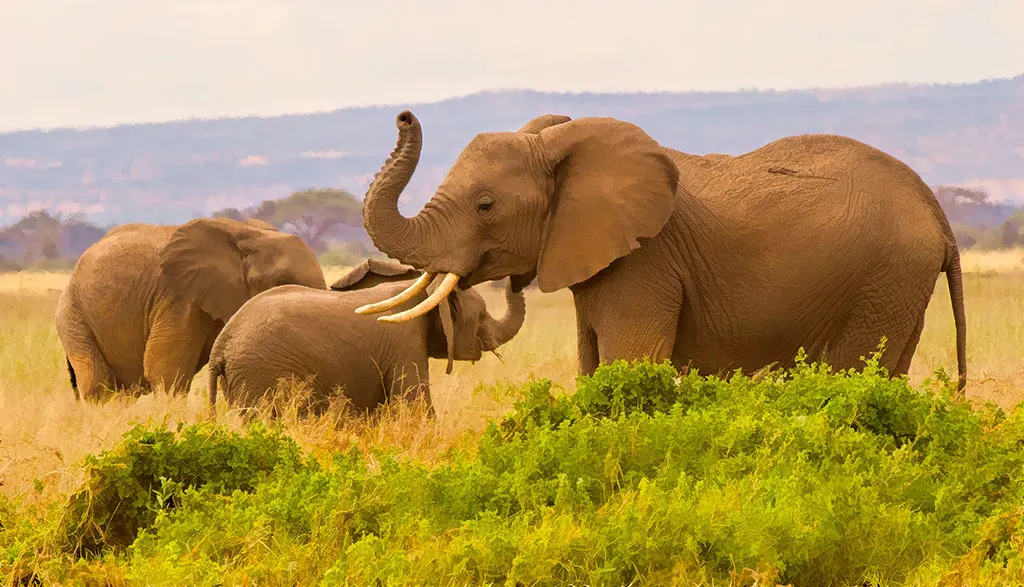
Nairobi National Park offers an exceptional introduction to Kenya’s wildlife and is a worthwhile addition to an East African holiday.
Whether you have a few hours in Nairobi or wish to explore Kenya alongside Uganda, Rwanda and Tanzania, Epic Uganda Vacation can help you create a safari that matches your interests, travel dates and budget.
We organise private and tailor-made African holidays, including wildlife safaris, mountain gorilla trekking, chimpanzee tracking, birdwatching, cultural experiences and multi-country East African adventures.
Thinking of an East Africa trip? Look no further.
Visit Epic Uganda Vacation to start planning your next African adventure.