Nabajjuzi Wetland Birding Safari: Discover Uganda’s Hidden Birdwatching Gem
Discover the remarkable birdlife of Nabajjuzi Wetland in Uganda with Epic Uganda Vacation on a memorable birdwatching safari near Masaka. Located in southwestern Uganda, along the route connecting Kampala with western Uganda, Nabajjuzi is an internationally important wetland known for its extensive papyrus swamps, diverse wildlife, and conservation value.
For birdwatchers, Nabajjuzi Wetland offers an opportunity to search for specialised papyrus birds, the elusive Shoebill, and other species that depend on Uganda’s freshwater wetlands. The surrounding landscape also supports the Sitatunga, a rare swamp-dwelling antelope adapted to life among dense wetland vegetation.
Whether you are planning a dedicated Uganda birding tour, a Shoebill-focused excursion, or a wildlife safari through southwestern Uganda, Nabajjuzi is a rewarding destination to consider.
Join Epic Uganda Vacation to explore this fascinating wetland, discover its unique birdlife, and learn why protecting Uganda’s natural habitats is essential for future generations.
Why Visit Nabajjuzi Wetland for Birdwatching?
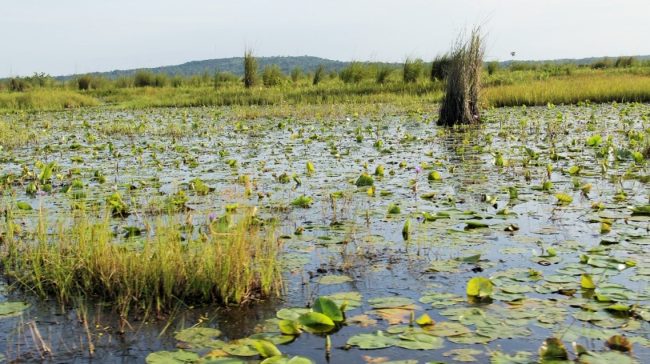
Nabajjuzi Wetland lies in the greater Masaka region of southwestern Uganda and forms part of a long wetland system extending through surrounding districts. Its extensive papyrus vegetation, open-water pools, and seasonally flooded areas provide habitats for numerous birds and other wildlife.
The wetland is recognised as a Ramsar Site and a Key Biodiversity Area because of its importance for threatened species, freshwater ecosystems, and local communities.
For birdwatchers, its greatest appeal lies in the opportunity to explore a papyrus-dominated ecosystem that supports birds not easily found in open savannah habitats.
Highlights of a Nabajjuzi Wetland birding safari include:
-
- Searching for the elusive Shoebill in suitable wetland habitat.
-
- Looking for the colourful Papyrus Gonolek.
-
- Searching for the threatened Papyrus Yellow Warbler.
-
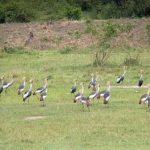
- Watching Grey Crowned Cranes in suitable wetland margins and grasslands.
-
- Exploring papyrus swamps for specialised marsh birds.
-
- Learning about wetland conservation and the importance of protecting Uganda’s biodiversity.
Nabajjuzi is also conveniently located for travellers heading toward Lake Mburo National Park and other destinations in western and southwestern Uganda.
Birds to Look for at Nabajjuzi Wetland
1. Shoebill
The Shoebill is one of Africa’s most extraordinary birds and a major attraction for specialist birdwatchers visiting Uganda. Its enormous shoe-shaped bill, prehistoric appearance, and patient hunting behaviour make it one of the most memorable species to encounter in the wild.
Nabajjuzi Wetland is a documented habitat for the Shoebill, which hunts fish in shallow water and suitable marsh channels. Its presence makes the wetland particularly interesting for birders hoping to expand their Uganda bird checklist.
Shoebills can remain motionless for long periods and are often difficult to locate in dense vegetation. A patient approach and guidance from a knowledgeable local birder can improve your chances of finding one.
Sightings are not guaranteed, so travellers with a particular interest in Shoebills should discuss recent local sightings and alternative viewing locations with their tour operator before departure.
2. Papyrus Gonolek
The Papyrus Gonolek is one of the most exciting birds to search for when exploring Nabajjuzi Wetland. This striking species is associated with papyrus swamps and is known for its contrasting plumage and distinctive calls.
Because it frequently remains hidden in thick vegetation, finding the Papyrus Gonolek requires patience, attentive listening, and careful observation along suitable papyrus edges.
For specialist birdwatchers, the opportunity to search for this wetland bird adds considerable interest to a Nabajjuzi birding excursion.
3. Papyrus Yellow Warbler
The Papyrus Yellow Warbler is another important target species for birders visiting Nabajjuzi Wetland.
This threatened bird depends on papyrus habitats, making the conservation of intact wetlands essential for its survival. Its presence highlights the ecological value of Nabajjuzi and the importance of protecting specialised habitats around Lake Victoria.
Birdwatchers should listen carefully for calls and observe suitable vegetation without entering or damaging sensitive nesting areas.
4. Grey Crowned Crane
The Grey Crowned Crane is one of Uganda’s most recognisable birds and the country’s national bird. Its golden crown, elegant movements, and distinctive displays make it a favourite among wildlife photographers.
The wider Nabajjuzi landscape includes wetland margins and grasslands that can provide suitable habitat for cranes. However, their local occurrence and visibility may vary with habitat conditions and human activity.
A guided birding excursion can help you identify suitable areas to search while minimising disturbance to the birds.
5. White-winged Swamp Warbler and Other Papyrus Specialists
Nabajjuzi’s papyrus vegetation provides habitat for additional specialised wetland birds, including the White-winged Swamp Warbler and other species associated with marsh vegetation.
These birds can be challenging to observe because they move through dense reeds and papyrus. Birdwatchers who take time to explore different sections of the wetland may discover a wider variety of species.
Your guide can help distinguish similar calls and explain how different birds use the wetland ecosystem.
6. Herons, Egrets, Kingfishers, and Other Wetland Birds
Beyond its specialised papyrus birds, Nabajjuzi supports a variety of species associated with freshwater wetlands.
Depending on the location and season, you may encounter herons, egrets, kingfishers, weavers, and other birds feeding or resting near open-water pools and wetland margins.
Exploring different habitats and allowing enough time for observation can make your birding excursion more rewarding.
Discover the Sitatunga at Nabajjuzi Wetland
Birdwatching is not the only reason to visit Nabajjuzi. The wetland is also known for the Sitatunga, a secretive antelope adapted to swamp environments.
Its widely splayed hooves help it move across soft, muddy ground and floating vegetation. Its preference for dense marsh vegetation makes it difficult to observe, even in areas where it occurs.
Although Sitatunga sightings are opportunistic rather than guaranteed, their presence adds another dimension to the wetland’s wildlife value.
With Epic Uganda Vacation, you can combine birdwatching with opportunities to learn about wetland ecology and the wildlife that depends on these specialised habitats.
Explore the Habitats of Nabajjuzi Wetland
Nabajjuzi offers more than one type of birdwatching environment. Its varied habitats support different species and make it an interesting destination for both experienced birders and nature enthusiasts.
Papyrus swamps: Dense papyrus provides shelter for specialised marsh birds, including the Papyrus Gonolek and Papyrus Yellow Warbler.
Open-water pools: Small pools within the wetland attract birds that feed on fish and other aquatic organisms.
Wetland margins: The transition between swamp vegetation and open land provides opportunities to observe a wider variety of birds.
Seasonally flooded grasslands: Depending on water levels and local conditions, these areas can attract cranes and other birds associated with wet grasslands.
River and drainage channels: Waterways connecting the wetland landscape contribute to its ecological diversity and support aquatic wildlife.
A knowledgeable local guide can help identify suitable locations and adapt the excursion to current conditions.
Best Time to Visit Nabajjuzi Wetland for Birding
Nabajjuzi Wetland can be explored throughout the year, but seasonal rainfall affects water levels, vegetation, accessibility, and bird activity.
The best time for your excursion depends on your target species and the conditions at the time of travel. Birdwatchers searching for Shoebills or papyrus specialists should allow sufficient time for careful observation rather than expecting immediate sightings.
Before your visit, it is advisable to confirm the availability of local guiding services, the condition of access routes, and any restrictions affecting particular viewing areas.
Epic Uganda Vacation can help you plan your excursion around your interests and incorporate Nabajjuzi into a broader Uganda birding itinerary.
What to Expect on a Nabajjuzi Wetland Birding Tour
A Nabajjuzi Wetland birding safari offers a chance to slow down, listen for bird calls, and explore one of southwestern Uganda’s important freshwater ecosystems.
Depending on current access arrangements, your experience may include:
-
- Guided birdwatching along accessible wetland edges.
-
- Searching for the Shoebill and specialised papyrus birds.
-
- Observing cranes, herons, egrets, and other wetland species.
-
- Wildlife photography in suitable viewing locations.
-
- Learning about the Sitatunga and other wetland-dependent wildlife.
-
- Discovering the importance of papyrus conservation and community-based ecotourism.
Bring binoculars, a camera, comfortable walking shoes, insect repellent, sun protection, and drinking water. Waterproof footwear may be useful in muddy areas.
Wetland conditions can change considerably after rainfall, and not every part of the swamp is safe or accessible. Follow your guide’s instructions and avoid entering dense vegetation without appropriate guidance.
Combine Nabajjuzi Wetland with Other Uganda Birding Destinations
One advantage of Nabajjuzi Wetland is its location along the road toward southwestern Uganda. It can potentially be incorporated into a wider safari, subject to travel time and local access.
Lake Mburo National Park
Lake Mburo offers a different combination of savannah, woodland, lakes, and seasonal wetlands. Combining it with Nabajjuzi provides opportunities to explore contrasting habitats and search for additional bird species.
Mabamba Bay Wetland
Mabamba Bay is one of Uganda’s best-known destinations for Shoebill tracking. Birdwatchers can combine a visit to Mabamba with Nabajjuzi to experience two different wetland landscapes, although neither site guarantees a sighting.
Sango Bay and Musambwa Islands
For travellers interested in the wider Lake Victoria region, Sango Bay and Musambwa Islands offer additional wetland and waterbird habitats. These locations can be included in a broader itinerary depending on the available time and transport arrangements.
Epic Uganda Vacation can help tailor your birding route according to your target species, schedule, and preferred style of travel.
Responsible Birdwatching and Wetland Conservation
Nabajjuzi Wetland is important for biodiversity, local livelihoods, and freshwater resources. It provides habitat for threatened wildlife and supports activities such as fishing and the harvesting of papyrus for traditional crafts.
However, habitat conversion, pollution, and increasing pressure on natural resources can threaten the wetland’s long-term ecological health.
Responsible tourism can help encourage greater appreciation of this important ecosystem.
During your visit:
-
- Maintain a respectful distance from birds and other wildlife.
-
- Avoid disturbing nests or using excessive playback to attract birds.
-
- Follow local guidance and remain on appropriate routes.
-
- Do not leave rubbish in the wetland.
-
- Respect local customs and the livelihoods of nearby communities.
-
- Support responsible local guiding and conservation initiatives where available.
Protecting Nabajjuzi is essential not only for its birds but also for the people who depend on the wetland for water, fish, and other resources.
Book Your Nabajjuzi Wetland Birding Safari with Epic Uganda Vacation
Are you ready to explore the birdlife of Nabajjuzi Wetland?
Epic Uganda Vacation can help you plan a personalised Nabajjuzi Wetland birding safari based on your travel dates, target species, and wider Uganda itinerary.
Whether you hope to search for the Shoebill, observe the Papyrus Gonolek, photograph wetland birds, or explore the landscapes around Masaka, we can help you organise a memorable birdwatching experience.
Contact Epic Uganda Vacation to discuss your preferred travel dates, local guiding arrangements, transport, and opportunities to combine Nabajjuzi with Lake Mburo National Park or other Ugandan birding destinations.
Discover Uganda’s hidden wetland treasures and experience the remarkable birdlife of Nabajjuzi with Epic Uganda Vacation.