Calving Season Safari in Tanzania: When travelers dream of the Great Migration in Tanzania, their minds usually drift toward the dramatic river crossings in the north. Visions of thundering hooves plunging into the crocodile-infested waters of the Mara River dominate nature documentaries. However, for the safari connoisseur, the true magic of the Serengeti ecosystem happens earlier in the year, during a quieter, greener, and profoundly intimate period known as the Calving Season.
Planning a safari around this miraculous event requires a specific approach, distinct from the dry-season game drives. It is a time when the southern Serengeti is transformed into a lush nursery, offering arguably the best predator action and the most scenic landscapes of the year. Here is how to plan the ultimate Calving Season Safari in Tanzania.
What is the Calving Season?
The Great Migration is a continuous, clockwise loop of roughly 1.5 million wildebeest, accompanied by hundreds of thousands of zebras and gazelles. While the herds are constantly moving, the months of January, February, and March see them concentrated in the short-grass plains of the southern Serengeti and the Ngorongoro Conservation Area.
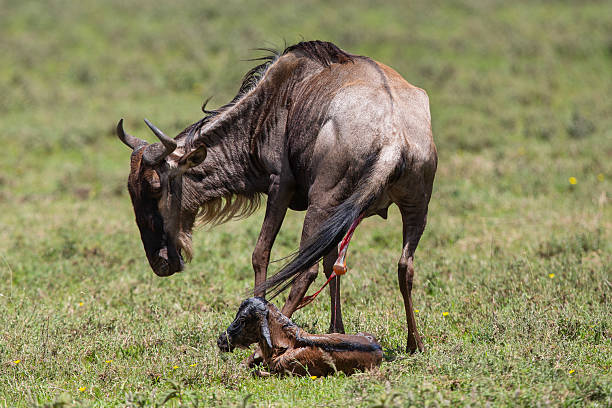
This period is defined by birth. In a synchronised explosion of life, nearly half a million wildebeest are born within a matter of weeks. This phenomenon is known as “predator swamping.” The females give birth almost simultaneously to ensure that the sheer volume of vulnerable offspring overwhelms the predators. Even if a pride of lions takes down several calves a day, the sheer math ensures the survival of the herd.
For the visitor, this translates into a wildlife spectacle that is chaotic, adorable, and brutally honest. It is the circle of life displayed in high definition.
What is the best timing for the Calving Season Safari?
Precision is key when planning this trip. The herds are driven by rain, so their location can vary slightly year to year, but the general window is reliable.
- January: The herds are usually moving south from the Central Serengeti (Seronera) toward the Ndutu region. The landscape is turning green, and the first births begin.
- February: This is the peak month. Known as the “baby month,” nearly 8,000 wildebeest are born daily. The action is frenetic, and the predator-prey dynamic is at its most intense.
- March: The herds are still in the south, but the grass grows taller, and the calves begin to gain strength. By late March, the heavy rains usually begin, and the herds start preparing for their long trek west.
Travelers should be prepared for the “Green Season.” This is the rainy season, characterized by short, dramatic thunderstorms in the afternoons. These rains clear the dust, fill the waterholes, and spark the growth of the nutrient-rich grass that draws the herds.
Selecting the Right Location: Ndutu and the Southern Plains
Unlike the dry season, where animals are scattered near permanent water sources, the calving season centers on specific geography. You must plan your accommodation strategically.
The epicenter of the action is the Ndutu Region. Located at the boundary of the Serengeti National Park and the Ngorongoro Conservation Area, Ndutu consists of alkaline lakes and marshy plains. The soil here is volcanic and rich in calcium and phosphorus, essential nutrients for lactating mothers and growing calves.
Ideally, you should split your stay between two locations:
Central Serengeti (Seronera): For the first or last night of your trip. This offers a good chance to see resident leopards and lions and breaks up the transit.
Ndutu or Kusini: Spend the bulk of your time here. Staying inside the Ngorongoro Conservation Area (allowing off-road driving) is a massive advantage during the calving season, as the herds often move into areas where vehicles are restricted in the national park proper.
The Wildlife Experience and What to Expect
A calving season safari is different from a standard game drive. Here is what you will witness:
- The Births: If you are lucky, you will witness a birth itself. It is a fast process; a wildebeest calf is usually on its feet within minutes of being born and running with the herd shortly after. It is a heartwarming sight to see the calves nuzzling their mothers, but it is also a race against time.
- The Predators: This is the prime reason serious photographers flock to the area in February. The abundance of vulnerable prey draws the highest concentration of predators in Africa.
- The Big Cats: Lions are everywhere. The prides are large and emboldened. You will likely see hunts, and the success rate for lions is higher during this season than any other. Cheetahs also thrive in the short grass, using their speed to chase down the young and inexperienced.
- Hyenas and Jackals: The scavengers are never far behind. Spotted hyenas are the primary predators of wildebeest calves during the day, often hunting in organized, relentless packs.
- Birdlife: The rains bring migratory birds from Europe and Asia. The flamingos on Lake Ndutu provide a spectacular pink contrast against the green plains and dark thunderclouds.
Logistics and Accommodation
Because the calving season coincides with the rains, logistics require careful consideration.
Most safari itineraries start from Kilimanjaro International Airport (JRO). You can either drive (a 6-8 hour drive) or take a scheduled flight to the Ndutu airstrip. Flying is recommended to maximize your time on the plains and avoid the long, muddy transit roads.
During the calving season, you have two main options: Luxury Permanent Lodges or Mobile Tented Camps. Mobile Camps are highly recommended. Staying in a mobile camp places you right in the heart of the action. You might wake up to the sounds of wildebeest grazing right next to your tent.
Packing and Preparation for the Calving Season Safari in Tanzania
Packing for the Green Season requires a different mindset than the dry season.
- Clothing: It can be surprisingly cold in the mornings and evenings on the open plains, with temperatures dropping to near freezing. Bring layers: a fleece, a warm windbreaker, and a hat. During the day, it warms up, so t-shirts are fine.
- Rain Gear: A high-quality poncho or waterproof jacket is essential. The rains can be sudden and heavy, but they usually pass quickly.
- Footwear: The ground can be muddy. Waterproof walking boots or sturdy shoes with good grip are necessary.
- Photography Gear: The light during the rainy season is spectacular, stormy skies make for dramatic, moody photos. Bring a zoom lens (200mm-400mm) to capture the predator action without disturbing the wildlife. A bean bag to stabilize your camera on the vehicle roof is also very helpful.
Ethical Considerations
With the high density of predators comes the inevitable reality of death. It is natural to feel sympathy for the calves, but it is vital to remember that this is how the ecosystem survives. The predators are simply feeding their own young.
Furthermore, always follow your guide’s instructions. Never pressure your driver to get too close to a hunt or to separate a mother from a calf. The welfare of the animals always comes first.
The Final Verdict
Planning a calving season safari is about choosing life in its most vibrant form. It is a raw, unfiltered look at the mechanics of nature. It requires a bit of fortitude to handle the mud and the rain, but the reward is witnessing the Serengeti at its most fertile. Watching a wildebeest calf take its first shaky steps, while a lion watches from the tall grass nearby, is a sight that stays with you forever. It is the Serengeti’s greatest secret, and for those who plan it right, it is the safari experience of a lifetime.